Hypermarket ERP System That Helps You Manage Retail Operations More Effectively
As hypermarket operations grow more complex, having the right systems in place becomes essential for maintaining efficiency, accuracy, and profitability

Running a hypermarket is very different from running a standard retail store.
A hypermarket may carry tens of thousands of SKUs across groceries, household products, personal care items, fresh goods, seasonal promotions, and imported merchandise. Every day, managers must balance stock availability, supplier coordination, pricing updates, promotions, replenishment planning, and branch performance.
As operations grow, spreadsheets and disconnected software often become the biggest obstacle to efficiency.
This is where a Hypermarket ERP System becomes essential.
What Is a Hypermarket ERP System?
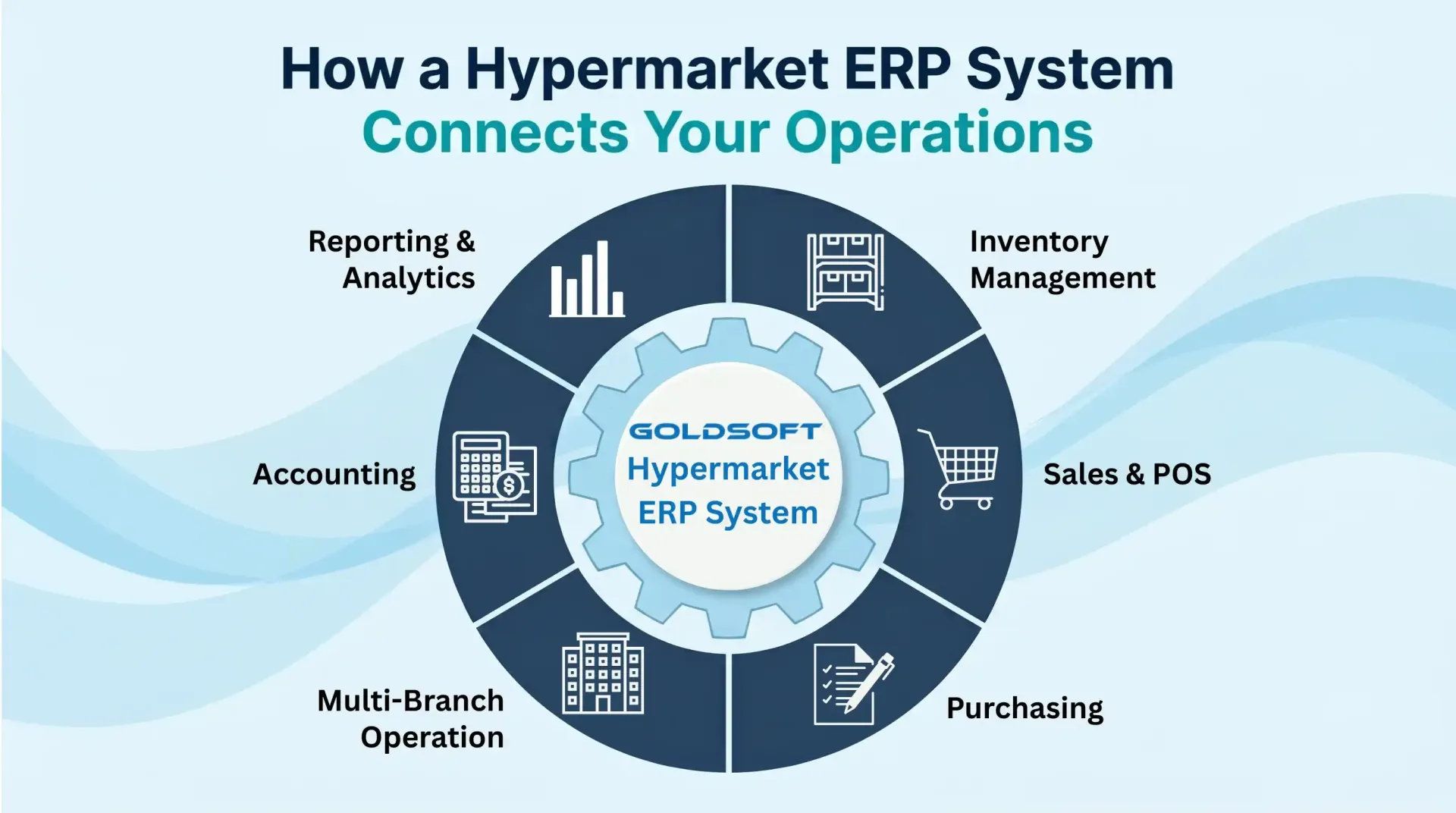
A Hypermarket ERP System is a centralized business management platform designed to connect the core operations of a hypermarket into a single system.
Instead of managing inventory, purchasing, sales, reporting, and accounting separately, an ERP system allows these functions to work together using the same set of data.
For decision makers, this means less time gathering information from different sources and more time making informed business decisions.
For operational teams, it means fewer manual processes, better visibility, and greater control over daily operations.
The Challenges Many Hypermarkets Face
As a hypermarket expands, operational complexity increases rapidly.
One of the most common issues is inventory visibility. Stock may appear available in one branch while another location experiences shortages. Without accurate information, businesses often end up overstocking slow-moving items while running out of products customers actually want.
Purchasing decisions can also become difficult when buyers do not have clear insights into demand patterns, supplier performance, or current inventory levels.
At the same time, management teams often struggle to obtain timely reports. By the time information is collected and consolidated, the opportunity to react may already be gone.
These problems not only increase operational costs but can also impact customer satisfaction and profitability.
| Challenges | Impact on Business |
|---|---|
| Stock shortages | Missed sales opportunities |
| Excess inventory | Higher inventory holding costs |
| Limited visibility between branches | Slower replenishment decisions |
| Delayed reporting | Reduced responsiveness to market changes |
Why Hypermarkets Need More Than Basic Retail Software
Many businesses start with standalone retail systems that work well during the early stages of growth.
However, as transaction volumes increase and multiple branches are introduced, businesses often discover that their systems are no longer providing the visibility required to manage operations effectively.
While a POS system is essential for handling daily sales, hypermarket operators need more than transaction processing. Whether using traditional checkout counters, dual-screen POS terminals, or self-checkout kiosks, businesses need a way to connect sales activity with inventory control, purchasing decisions, financial reporting, and overall business performance. Without that connection, valuable information remains scattered across different systems and departments.
It helps businesses understand what is happening across the organization by providing a clearer view of inventory movement, purchasing activities, sales performance, and operational trends.
This visibility enables management teams to make decisions based on actual business data rather than assumptions.
How Goldsoft ERP Helps Hypermarkets Operate More Efficiently
At Goldsoft, we understand that every hypermarket operates differently.
Some focus on groceries and fresh goods. Others manage large product ranges across multiple departments and locations. Because of these differences, a one-size-fits-all approach rarely delivers the best results.
Goldsoft ERP is designed to help hypermarkets gain better control over their operations while remaining flexible enough to adapt to different business requirements.
⚠️️ ERP Flexibility Matters in Hypermarket Operations
A hypermarket's operational structure is rarely identical to another's. Differences in product categories, supplier relationships, branch networks, and internal workflows often require a system that can adapt to the business rather than forcing the business to adapt to the system.
Rather than forcing businesses to change their processes to fit a rigid system, Goldsoft works closely with customers to ensure the ERP solution supports their operational needs.
With better visibility across inventory, purchasing, sales, and financial data, management teams can identify issues earlier, respond faster, and make more confident decisions.
This helps reduce operational inefficiencies while creating a stronger foundation for growth.
List of Services
-
1. Better Inventory Control Across Multiple LocationsList Item 1
Inventory is often one of the largest investments for a hypermarket.
Without accurate inventory information, businesses may experience stock shortages, excess inventory, or unnecessary carrying costs.
Goldsoft ERP helps businesses maintain greater visibility over stock movement across branches, warehouses, and distribution points.
This visibility becomes even more valuable when inventory records are supported by sales activity happening at checkout counters. As products are sold throughout the day, businesses can monitor inventory movement more accurately and gain better insight into which products require replenishment, which items are moving slowly, and how demand differs between locations.
When management has access to timely inventory information, replenishment decisions become more accurate and stock-related issues can be identified earlier.
The result is better inventory utilization and improved product availability for customers.
-
2. Faster Decision Making with Centralized InformationList Item 2
One of the biggest advantages of an ERP system is the ability to access business information from a centralized platform.
Instead of waiting for reports from different departments, management teams can gain a clearer picture of business performance through a single source of information.
This is particularly valuable for hypermarkets where thousands of transactions occur every day.
Whether reviewing sales trends, monitoring inventory levels, or evaluating operational performance, decision makers can access the information they need more quickly and efficiently.
-
3. Built for GrowthList Item 3
Many businesses invest in software that meets their current needs but struggles to support future growth.
As a hypermarket expands into additional branches, introduces new product categories, or increases transaction volume, operational requirements become more complex.
Goldsoft ERP is designed to support this growth by providing a flexible foundation that can adapt as business needs evolve.
Choosing the Right Hypermarket ERP Partner
Selecting an ERP system is not simply a software decision. It is a business decision that can affect operational efficiency, visibility, and profitability for years to come.
The right ERP partner should understand retail operations, support business growth, and provide a solution that aligns with how your organization works.
At Goldsoft, we focus on helping hypermarkets gain better control over their operations through practical, scalable ERP solutions tailored to real business needs.
If your hypermarket is facing challenges with inventory management, operational visibility, or business growth, it may be time to explore how the right ERP system can help.
See Goldsoft ERP in Action
Every hypermarket faces unique operational challenges. That's why the best way to understand the value of an ERP system is through a personalized demonstration.
Contact us at 03-2732 8833 or fill up the form below to discover how our ERP solution can help your hypermarket improve visibility, strengthen inventory control, and support long-term growth.
Contact Us
Share
Recent Articles